SKU:PING-4903-GE
Pinguicula moranensis (Mexican Butterwort)
Pinguicula moranensis (Mexican Butterwort)
Pinguicula moranensis is one of the most widespread and variable butterwort species in Mexico, occurring across the mountainous regions of central and southern Mexico, as well as parts of Guatemala. It grows on moss-covered cliffs, rocky slopes, limestone outcrops, and thin soils within pine-oak forests and cloud forests, often in areas that experience distinct wet and dry seasons. Its adaptability to a wide range of habitats has resulted in considerable natural variation in size, leaf shape, flower colour, and growth habit, making it one of the most important and widely cultivated species in the genus.
Like all butterworts, Pinguicula moranensis captures small insects using specialised leaves covered in microscopic glands that produce a sticky mucilage. Fungus gnats, small flies, and other tiny arthropods become trapped on the leaf surface, where digestive enzymes break down prey and release nutrients that are absorbed directly through the foliage. During the growing season, plants produce attractive carnivorous rosettes with leaves ranging from bright green to shades of pink, bronze, or reddish-purple under stronger light. Large, showy flowers are produced on slender stalks above the foliage and may vary from white and pale pink to deep lavender or purple depending on the population or form.
A defining characteristic of Pinguicula moranensis is its seasonal growth cycle. During cooler or drier periods, plants transition into a compact succulent rosette that helps them survive changing environmental conditions before returning to active carnivorous growth when moisture becomes available. Its combination of beautiful flowers, colourful foliage, adaptability, and ease of cultivation has made P. moranensis one of the most popular butterwort species worldwide. It has also played a major role in the development of numerous horticultural hybrids, cementing its importance within both cultivation and conservation of Mexican carnivorous plants.
Origin: Central and southern Mexico, extending into Guatemala
Plant Type: Perennial carnivorous butterwort
Growth Habit: Compact to medium-sized rosette with seasonal carnivorous and succulent growth phases
Flowers: Large flowers ranging from white and pink to lavender and purple
Light: Bright indirect light to filtered sun
Water: Prefers pure water and moderate moisture during active growth
Growing Medium: Open, mineral-rich butterwort mix with excellent drainage
Dormancy: Seasonal succulent rosette during cooler or drier periods
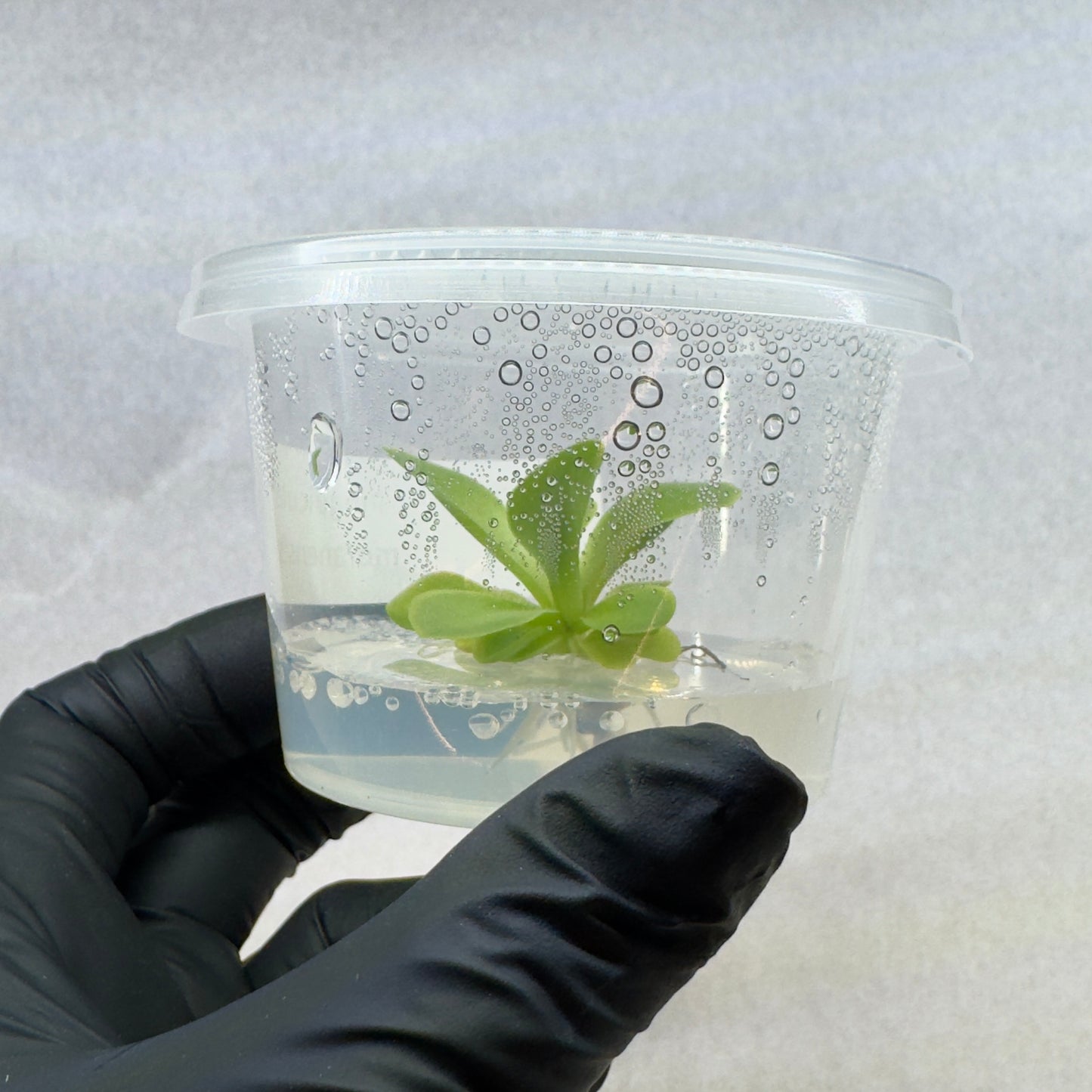
What's Included: One healthy Pinguicula moranensis growing in a Nano Nursery cup, ready to continue developing under suitable conditions.
A tissue culture plants are grown in clear gel, transparent container that holds multiple young plants (typically 3 or more) grown under laboratory conditions.
Our Gel Cup are non-sterile gel media that we use for start the hardening process after a plant has been in tissue culture.These vessels provide a carefully controlled environment, keeping the plants healthy as the get ready to transition to standard growing conditions.
Quick Hardening Steps:
- Open Lid Gradually: Slightly open the cup to slowly reduce humidity.
- Maintain Humidity: Gradually decrease humidity over 2–4 weeks.
- Indirect Light: Start with gentle, indirect lighting.
- Moist Soil: Keep media damp, never wet.
- Monitor Closely: Slowly increase airflow and light exposure.


Each transparent Transition Cup (5 cm diameter × 7 cm height) contains a juvenile carnivorous plant that has moved beyond sterile tissue culture and into a structured transition medium.
Inside, you’ll find a young carnivorous plant securely planted in a semi-solid blend designed to support root development while easing the shift from gel to soil.
This carefully balanced environment maintains optimal humidity and airflow, helping reduce transplant shock and supporting the plant during this critical transition stage.
Suitable for both novice growers and experienced collectors, Transition Cups provide a reliable, low-stress way to guide delicate carnivorous plants toward successful soil establishment.
Each transparent carnivorous cup (5 cm diameter x 7 cm height) contains a juvenile carnivorous plant freshly transitioned from tissue culture.
Inside, you'll find a young carnivorous plant planted securely in special growing media soil that replicates their natural habitat.
This carefully balanced environment maintains optimal humidity, aiding the delicate plants during their crucial hardening-off stage.
Perfect for both novice growers and experienced collectors, these cups provide a simple and effective way to cultivate and enjoy captivating insect-eating plants.
Couldn't load pickup availability
Pinguicula moranensis is one of the most widespread and variable butterwort species in Mexico, occurring across the mountainous regions of central and southern Mexico, as well as parts of Guatemala. It grows on moss-covered cliffs, rocky slopes, limestone outcrops, and thin soils within pine-oak forests and cloud forests, often in areas that experience distinct wet and dry seasons. Its adaptability to a wide range of habitats has resulted in considerable natural variation in size, leaf shape, flower colour, and growth habit, making it one of the most important and widely cultivated species in the genus.
Like all butterworts, Pinguicula moranensis captures small insects using specialised leaves covered in microscopic glands that produce a sticky mucilage. Fungus gnats, small flies, and other tiny arthropods become trapped on the leaf surface, where digestive enzymes break down prey and release nutrients that are absorbed directly through the foliage. During the growing season, plants produce attractive carnivorous rosettes with leaves ranging from bright green to shades of pink, bronze, or reddish-purple under stronger light. Large, showy flowers are produced on slender stalks above the foliage and may vary from white and pale pink to deep lavender or purple depending on the population or form.
A defining characteristic of Pinguicula moranensis is its seasonal growth cycle. During cooler or drier periods, plants transition into a compact succulent rosette that helps them survive changing environmental conditions before returning to active carnivorous growth when moisture becomes available. Its combination of beautiful flowers, colourful foliage, adaptability, and ease of cultivation has made P. moranensis one of the most popular butterwort species worldwide. It has also played a major role in the development of numerous horticultural hybrids, cementing its importance within both cultivation and conservation of Mexican carnivorous plants.
Origin: Central and southern Mexico, extending into Guatemala
Plant Type: Perennial carnivorous butterwort
Growth Habit: Compact to medium-sized rosette with seasonal carnivorous and succulent growth phases
Flowers: Large flowers ranging from white and pink to lavender and purple
Light: Bright indirect light to filtered sun
Water: Prefers pure water and moderate moisture during active growth
Growing Medium: Open, mineral-rich butterwort mix with excellent drainage
Dormancy: Seasonal succulent rosette during cooler or drier periods
What's Included: One healthy Pinguicula moranensis growing in a Nano Nursery cup, ready to continue developing under suitable conditions.
A tissue culture plants are grown in clear gel, transparent container that holds multiple young plants (typically 3 or more) grown under laboratory conditions.
Our Gel Cup are non-sterile gel media that we use for start the hardening process after a plant has been in tissue culture.These vessels provide a carefully controlled environment, keeping the plants healthy as the get ready to transition to standard growing conditions.
Quick Hardening Steps:
- Open Lid Gradually: Slightly open the cup to slowly reduce humidity.
- Maintain Humidity: Gradually decrease humidity over 2–4 weeks.
- Indirect Light: Start with gentle, indirect lighting.
- Moist Soil: Keep media damp, never wet.
- Monitor Closely: Slowly increase airflow and light exposure.
Each transparent Transition Cup (5 cm diameter × 7 cm height) contains a juvenile carnivorous plant that has moved beyond sterile tissue culture and into a structured transition medium.
Inside, you’ll find a young carnivorous plant securely planted in a semi-solid blend designed to support root development while easing the shift from gel to soil.
This carefully balanced environment maintains optimal humidity and airflow, helping reduce transplant shock and supporting the plant during this critical transition stage.
Suitable for both novice growers and experienced collectors, Transition Cups provide a reliable, low-stress way to guide delicate carnivorous plants toward successful soil establishment.
Each transparent carnivorous cup (5 cm diameter x 7 cm height) contains a juvenile carnivorous plant freshly transitioned from tissue culture.
Inside, you'll find a young carnivorous plant planted securely in special growing media soil that replicates their natural habitat.
This carefully balanced environment maintains optimal humidity, aiding the delicate plants during their crucial hardening-off stage.
Perfect for both novice growers and experienced collectors, these cups provide a simple and effective way to cultivate and enjoy captivating insect-eating plants.