SKU:PING-3751-SO
Pinguicula martinezii (Butterwort)
Pinguicula martinezii (Butterwort)
Pinguicula martinezii is a rare and highly distinctive Mexican butterwort endemic to a small area of Oaxaca, Mexico. It grows on moist limestone cliffs, shaded rock faces, and moss-covered seepage zones within mountainous habitats where seasonal moisture and mineral-rich substrates provide ideal growing conditions. Due to its restricted distribution and specialised habitat requirements, this species is considered one of the more uncommon members of the Mexican butterwort group and is highly prized by collectors interested in species-level conservation and biodiversity.
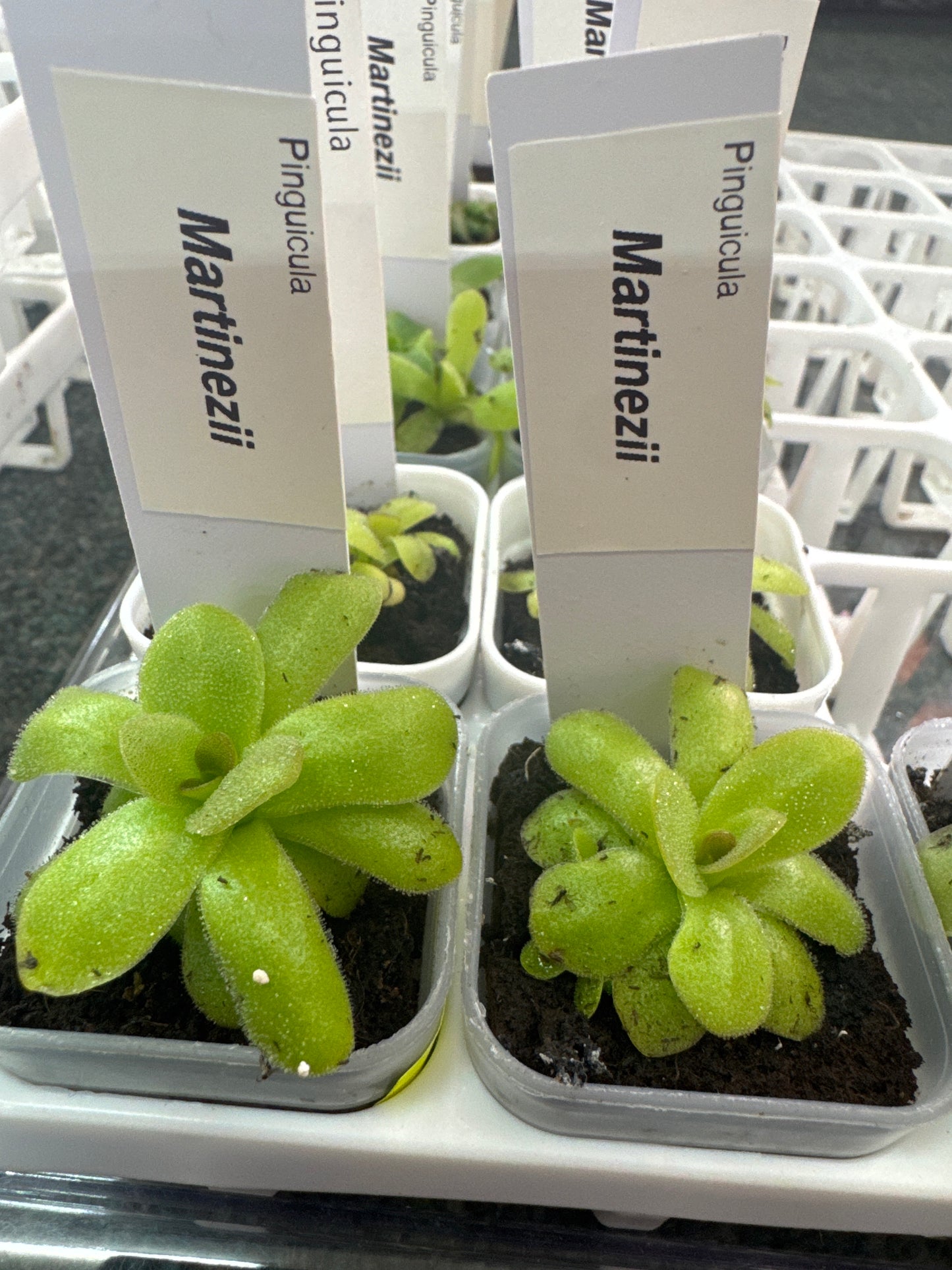
Like other members of the genus, Pinguicula martinezii captures small insects using specialised leaves covered in microscopic glandular structures that secrete a sticky mucilage. Fungus gnats, tiny flies, and other minute arthropods become trapped on the leaf surface, where digestive enzymes break down prey and release nutrients that are absorbed directly through the foliage. Plants form compact rosettes of bright green to yellow-green leaves that may develop subtle pink or bronze tones under stronger light. During the flowering season, mature specimens produce elegant violet to lavender-purple flowers held above the foliage on slender stems, creating a striking display despite the plant's relatively small size.
This species follows the seasonal growth cycle typical of many Mexican butterworts, producing actively carnivorous foliage during favourable conditions and transitioning to a compact succulent rosette during cooler or drier periods. Its rarity, attractive flowers, and limited natural distribution have made Pinguicula martinezii particularly desirable among enthusiasts seeking unusual species from Mexico's rich carnivorous plant flora. As one of the less commonly cultivated butterworts, it represents an important part of the remarkable diversity found within the genus.
Origin: Oaxaca, Mexico
Plant Type: Perennial carnivorous butterwort
Growth Habit: Compact rosette with seasonal carnivorous and succulent growth phases
Flowers: Violet to lavender-purple flowers borne on slender stalks
Light: Bright indirect light to filtered sun
Water: Prefers pure water and moderate moisture during active growth
Growing Medium: Open, mineral-rich butterwort mix with excellent drainage
Dormancy: Seasonal succulent rosette during cooler or drier periods
What's Included: One healthy Pinguicula martinezii growing in a Nano Nursery cup, ready to continue developing under suitable conditions.
A tissue culture plants are grown in clear gel, transparent container that holds multiple young plants (typically 3 or more) grown under laboratory conditions.
Our Gel Cup are non-sterile gel media that we use for start the hardening process after a plant has been in tissue culture.These vessels provide a carefully controlled environment, keeping the plants healthy as the get ready to transition to standard growing conditions.
Quick Hardening Steps:
- Open Lid Gradually: Slightly open the cup to slowly reduce humidity.
- Maintain Humidity: Gradually decrease humidity over 2–4 weeks.
- Indirect Light: Start with gentle, indirect lighting.
- Moist Soil: Keep media damp, never wet.
- Monitor Closely: Slowly increase airflow and light exposure.


Each transparent Transition Cup (5 cm diameter × 7 cm height) contains a juvenile carnivorous plant that has moved beyond sterile tissue culture and into a structured transition medium.
Inside, you’ll find a young carnivorous plant securely planted in a semi-solid blend designed to support root development while easing the shift from gel to soil.
This carefully balanced environment maintains optimal humidity and airflow, helping reduce transplant shock and supporting the plant during this critical transition stage.
Suitable for both novice growers and experienced collectors, Transition Cups provide a reliable, low-stress way to guide delicate carnivorous plants toward successful soil establishment.
Each transparent carnivorous cup (5 cm diameter x 7 cm height) contains a juvenile carnivorous plant freshly transitioned from tissue culture.
Inside, you'll find a young carnivorous plant planted securely in special growing media soil that replicates their natural habitat.
This carefully balanced environment maintains optimal humidity, aiding the delicate plants during their crucial hardening-off stage.
Perfect for both novice growers and experienced collectors, these cups provide a simple and effective way to cultivate and enjoy captivating insect-eating plants.
Couldn't load pickup availability
Pinguicula martinezii is a rare and highly distinctive Mexican butterwort endemic to a small area of Oaxaca, Mexico. It grows on moist limestone cliffs, shaded rock faces, and moss-covered seepage zones within mountainous habitats where seasonal moisture and mineral-rich substrates provide ideal growing conditions. Due to its restricted distribution and specialised habitat requirements, this species is considered one of the more uncommon members of the Mexican butterwort group and is highly prized by collectors interested in species-level conservation and biodiversity.
Like other members of the genus, Pinguicula martinezii captures small insects using specialised leaves covered in microscopic glandular structures that secrete a sticky mucilage. Fungus gnats, tiny flies, and other minute arthropods become trapped on the leaf surface, where digestive enzymes break down prey and release nutrients that are absorbed directly through the foliage. Plants form compact rosettes of bright green to yellow-green leaves that may develop subtle pink or bronze tones under stronger light. During the flowering season, mature specimens produce elegant violet to lavender-purple flowers held above the foliage on slender stems, creating a striking display despite the plant's relatively small size.
This species follows the seasonal growth cycle typical of many Mexican butterworts, producing actively carnivorous foliage during favourable conditions and transitioning to a compact succulent rosette during cooler or drier periods. Its rarity, attractive flowers, and limited natural distribution have made Pinguicula martinezii particularly desirable among enthusiasts seeking unusual species from Mexico's rich carnivorous plant flora. As one of the less commonly cultivated butterworts, it represents an important part of the remarkable diversity found within the genus.
Origin: Oaxaca, Mexico
Plant Type: Perennial carnivorous butterwort
Growth Habit: Compact rosette with seasonal carnivorous and succulent growth phases
Flowers: Violet to lavender-purple flowers borne on slender stalks
Light: Bright indirect light to filtered sun
Water: Prefers pure water and moderate moisture during active growth
Growing Medium: Open, mineral-rich butterwort mix with excellent drainage
Dormancy: Seasonal succulent rosette during cooler or drier periods
What's Included: One healthy Pinguicula martinezii growing in a Nano Nursery cup, ready to continue developing under suitable conditions.
A tissue culture plants are grown in clear gel, transparent container that holds multiple young plants (typically 3 or more) grown under laboratory conditions.
Our Gel Cup are non-sterile gel media that we use for start the hardening process after a plant has been in tissue culture.These vessels provide a carefully controlled environment, keeping the plants healthy as the get ready to transition to standard growing conditions.
Quick Hardening Steps:
- Open Lid Gradually: Slightly open the cup to slowly reduce humidity.
- Maintain Humidity: Gradually decrease humidity over 2–4 weeks.
- Indirect Light: Start with gentle, indirect lighting.
- Moist Soil: Keep media damp, never wet.
- Monitor Closely: Slowly increase airflow and light exposure.
Each transparent Transition Cup (5 cm diameter × 7 cm height) contains a juvenile carnivorous plant that has moved beyond sterile tissue culture and into a structured transition medium.
Inside, you’ll find a young carnivorous plant securely planted in a semi-solid blend designed to support root development while easing the shift from gel to soil.
This carefully balanced environment maintains optimal humidity and airflow, helping reduce transplant shock and supporting the plant during this critical transition stage.
Suitable for both novice growers and experienced collectors, Transition Cups provide a reliable, low-stress way to guide delicate carnivorous plants toward successful soil establishment.
Each transparent carnivorous cup (5 cm diameter x 7 cm height) contains a juvenile carnivorous plant freshly transitioned from tissue culture.
Inside, you'll find a young carnivorous plant planted securely in special growing media soil that replicates their natural habitat.
This carefully balanced environment maintains optimal humidity, aiding the delicate plants during their crucial hardening-off stage.
Perfect for both novice growers and experienced collectors, these cups provide a simple and effective way to cultivate and enjoy captivating insect-eating plants.