SKU:DROS4246G
Drosera × corinthiaca (Sundew)
Drosera × corinthiaca (Sundew)
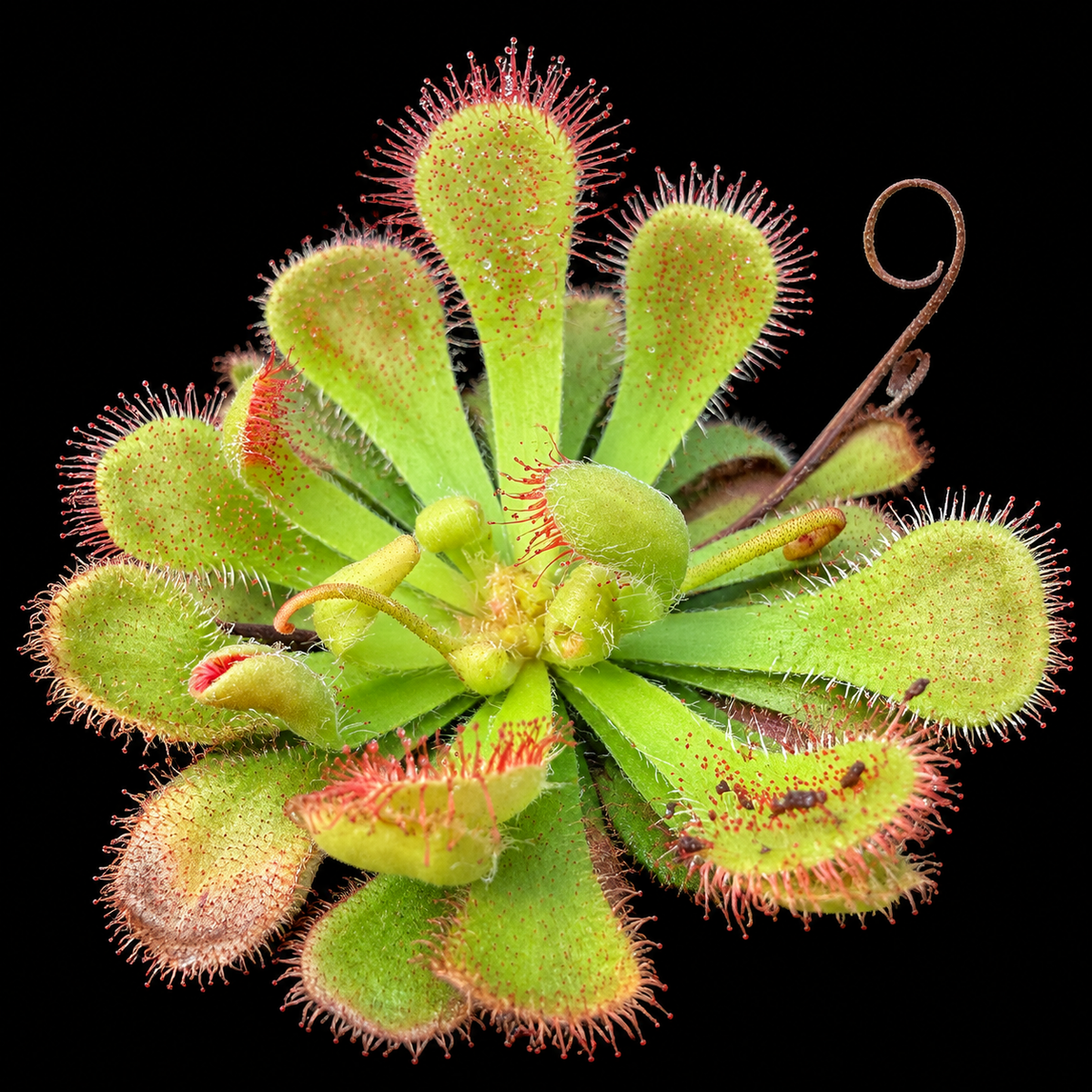
Drosera × corinthiaca is a naturally occurring South African sundew hybrid between Drosera aliciae and Drosera glabripes. It forms a semi-upright arrangement of green to yellow-green leaves, covered in red tentacles tipped with sticky droplets that capture small insects. Its distinctive growth habit and glistening foliage make it an appealing addition to a carnivorous plant collection.
Growing guide
-
Light: Very bright light to full sun; acclimatise gradually to stronger conditions. Strong light can encourage reddish colouration, but provide some protection from intense summer heat.
-
Water: Use rainwater, distilled water or reverse-osmosis water. Keep the growing medium consistently moist, using a shallow tray during active growth.
-
Soil: Use a nutrient-poor carnivorous plant mix, such as unfertilised sphagnum peat blended with perlite.
-
Feeding: The sticky leaves capture small insects and absorb nutrients from them. Do not use ordinary fertiliser.
-
Seasonal care: Protect from frost and excessive heat. Growth may slow in cooler weather; reduce standing water while keeping the medium moist.
-
Maintenance: Carefully remove dead leaves as needed and keep competing moss or weeds under control. Avoid touching the sticky leaf surfaces.
Plants are living products and naturally vary in size and colour. Dew production and colouration are strongest under suitable bright light.
A tissue culture plants are grown in clear gel, transparent container that holds multiple young plants (typically 3 or more) grown under laboratory conditions.
Our Gel Cup are non-sterile gel media that we use for start the hardening process after a plant has been in tissue culture.These vessels provide a carefully controlled environment, keeping the plants healthy as the get ready to transition to standard growing conditions.
Quick Hardening Steps:
- Open Lid Gradually: Slightly open the cup to slowly reduce humidity.
- Maintain Humidity: Gradually decrease humidity over 2–4 weeks.
- Indirect Light: Start with gentle, indirect lighting.
- Moist Soil: Keep media damp, never wet.
- Monitor Closely: Slowly increase airflow and light exposure.
Each transparent Transition Cup (5 cm diameter × 7 cm height) contains a juvenile carnivorous plant that has moved beyond sterile tissue culture and into a structured transition medium.
Inside, you’ll find a young carnivorous plant securely planted in a semi-solid blend designed to support root development while easing the shift from gel to soil.
This carefully balanced environment maintains optimal humidity and airflow, helping reduce transplant shock and supporting the plant during this critical transition stage.
Suitable for both novice growers and experienced collectors, Transition Cups provide a reliable, low-stress way to guide delicate carnivorous plants toward successful soil establishment.
Each transparent carnivorous cup (5 cm diameter x 7 cm height) contains a juvenile carnivorous plant freshly transitioned from tissue culture.
Inside, you'll find a young carnivorous plant planted securely in special growing media soil that replicates their natural habitat.
This carefully balanced environment maintains optimal humidity, aiding the delicate plants during their crucial hardening-off stage.
Perfect for both novice growers and experienced collectors, these cups provide a simple and effective way to cultivate and enjoy captivating insect-eating plants.
Couldn't load pickup availability
Drosera × corinthiaca is a naturally occurring South African sundew hybrid between Drosera aliciae and Drosera glabripes. It forms a semi-upright arrangement of green to yellow-green leaves, covered in red tentacles tipped with sticky droplets that capture small insects. Its distinctive growth habit and glistening foliage make it an appealing addition to a carnivorous plant collection.
Growing guide
-
Light: Very bright light to full sun; acclimatise gradually to stronger conditions. Strong light can encourage reddish colouration, but provide some protection from intense summer heat.
-
Water: Use rainwater, distilled water or reverse-osmosis water. Keep the growing medium consistently moist, using a shallow tray during active growth.
-
Soil: Use a nutrient-poor carnivorous plant mix, such as unfertilised sphagnum peat blended with perlite.
-
Feeding: The sticky leaves capture small insects and absorb nutrients from them. Do not use ordinary fertiliser.
-
Seasonal care: Protect from frost and excessive heat. Growth may slow in cooler weather; reduce standing water while keeping the medium moist.
-
Maintenance: Carefully remove dead leaves as needed and keep competing moss or weeds under control. Avoid touching the sticky leaf surfaces.
Plants are living products and naturally vary in size and colour. Dew production and colouration are strongest under suitable bright light.
A tissue culture plants are grown in clear gel, transparent container that holds multiple young plants (typically 3 or more) grown under laboratory conditions.
Our Gel Cup are non-sterile gel media that we use for start the hardening process after a plant has been in tissue culture.These vessels provide a carefully controlled environment, keeping the plants healthy as the get ready to transition to standard growing conditions.
Quick Hardening Steps:
- Open Lid Gradually: Slightly open the cup to slowly reduce humidity.
- Maintain Humidity: Gradually decrease humidity over 2–4 weeks.
- Indirect Light: Start with gentle, indirect lighting.
- Moist Soil: Keep media damp, never wet.
- Monitor Closely: Slowly increase airflow and light exposure.
Each transparent Transition Cup (5 cm diameter × 7 cm height) contains a juvenile carnivorous plant that has moved beyond sterile tissue culture and into a structured transition medium.
Inside, you’ll find a young carnivorous plant securely planted in a semi-solid blend designed to support root development while easing the shift from gel to soil.
This carefully balanced environment maintains optimal humidity and airflow, helping reduce transplant shock and supporting the plant during this critical transition stage.
Suitable for both novice growers and experienced collectors, Transition Cups provide a reliable, low-stress way to guide delicate carnivorous plants toward successful soil establishment.
Each transparent carnivorous cup (5 cm diameter x 7 cm height) contains a juvenile carnivorous plant freshly transitioned from tissue culture.
Inside, you'll find a young carnivorous plant planted securely in special growing media soil that replicates their natural habitat.
This carefully balanced environment maintains optimal humidity, aiding the delicate plants during their crucial hardening-off stage.
Perfect for both novice growers and experienced collectors, these cups provide a simple and effective way to cultivate and enjoy captivating insect-eating plants.