SKU:4201
Dionaea muscipula 'Typical' (Venus Flytrap) – 7cm Pot
Dionaea muscipula 'Typical' (Venus Flytrap) – 7cm Pot
Scientific Name: Dionaea muscipula 'Typical'
Also known as: Typical Venus Flytrap, Common Venus Flytrap
Origin: Native to the coastal plains of North and South Carolina, USA. Grown from cultivated stock.
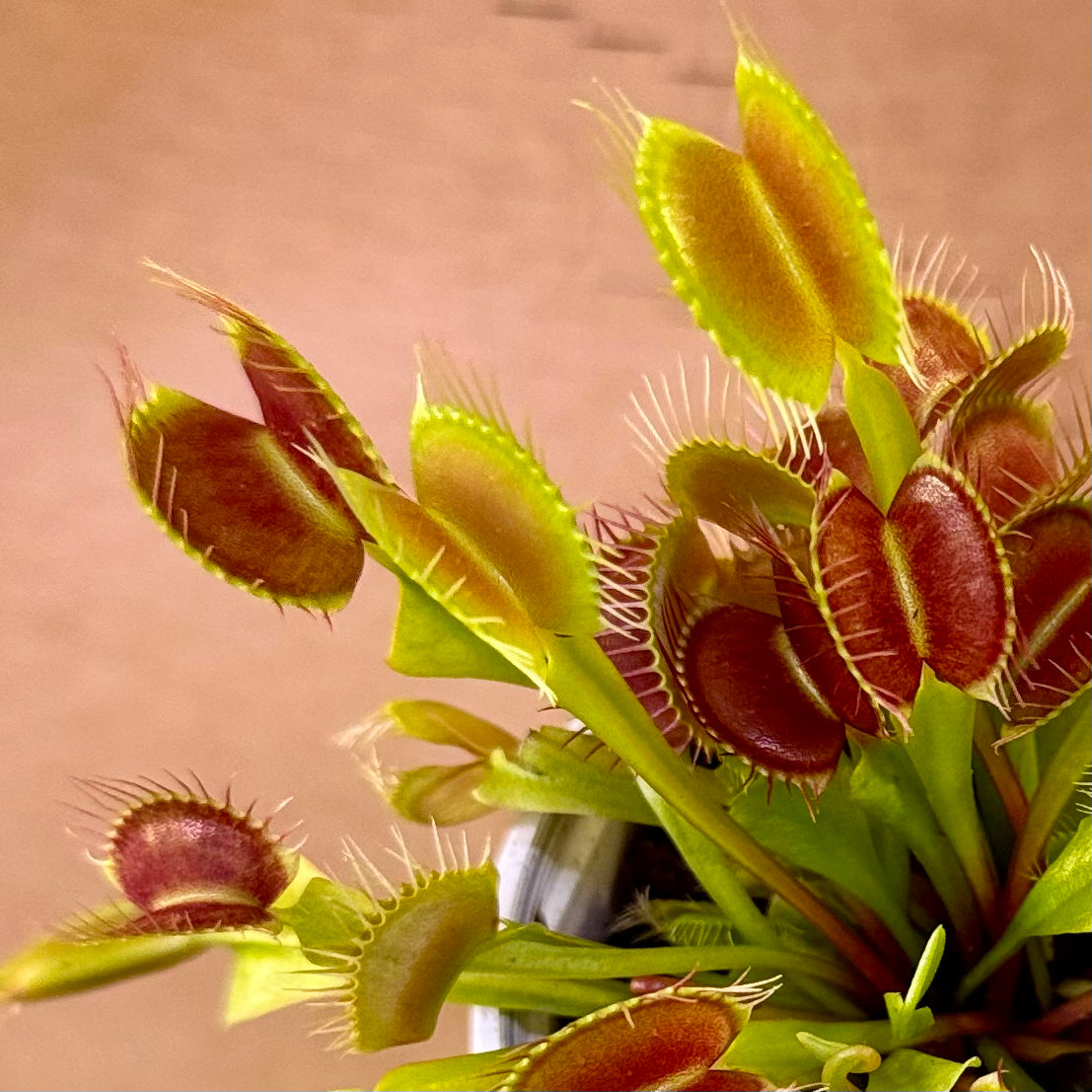
Dionaea muscipula 'Typical' is the classic Venus Flytrap variety, best known for its snapping jaw-like traps that close quickly when triggered by unsuspecting insects. Each trap is lined with sensitive trigger hairs and edged with fine teeth, forming a natural cage once closed. The 'Typical' form features green leaves and traps, often with red blushing inside the trap when grown in bright light. Easy to grow with the right conditions, this iconic carnivorous plant is both fascinating and functional—perfect for beginners, classrooms, and collectors alike.
Growing Requirements
Light: Full sun to bright indirect light. Requires at least 12–16 hours of direct sunlight or strong artificial lighting (5000–6500K) daily for healthy growth and trap coloration.
Water: Use only distilled, rainwater, or reverse osmosis (RO) water.
Watering:
-
Growing season (spring–autumn): Keep the soil consistently moist. Best grown sitting in a shallow tray of water.
-
Dormant season (winter): Reduce watering slightly and keep soil just damp. Avoid standing water when plant is dormant.
Humidity: 40–70% preferred. Adapts well to typical household humidity if light and water needs are met.
Temperature: Thrives in 20–30°C during active growth. Requires a winter dormancy at 5–10°C for 2–3 months.
Feeding: Catches its own prey. Do not overfeed. One insect per trap every few weeks is sufficient. Do not trigger traps without food, as this wastes energy.
Dormancy: Yes—requires a true winter dormancy. Leaves may blacken and die back. Resume full watering and light in spring when new growth appears.
What’s Included
Plant: One Dionaea muscipula 'Typical' plant in active or dormant phase depending on season. Size varies, with 3–6+ traps per plant. Grown outdoors in Australian conditions.
Pot: 7 cm nursery pot. Ready to grow—no transplanting required.
Medium: Nutrient-free peat-based carnivorous plant mix—moisture-retentive, well-draining, and suitable for Venus Flytraps.
Instructions: Step-by-step planting and care guide included.
Beginner Tips
-
Don’t feed raw meat—only small live or dried insects.
-
Let it rest in winter—cool temperatures and reduced light are essential for dormancy.
-
Only use mineral-free water—tap water can kill Venus Flytraps.
A tissue culture plants are grown in clear gel, transparent container that holds multiple young plants (typically 3 or more) grown under laboratory conditions.
Our Gel Cup are non-sterile gel media that we use for start the hardening process after a plant has been in tissue culture.These vessels provide a carefully controlled environment, keeping the plants healthy as the get ready to transition to standard growing conditions.
Quick Hardening Steps:
- Open Lid Gradually: Slightly open the cup to slowly reduce humidity.
- Maintain Humidity: Gradually decrease humidity over 2–4 weeks.
- Indirect Light: Start with gentle, indirect lighting.
- Moist Soil: Keep media damp, never wet.
- Monitor Closely: Slowly increase airflow and light exposure.


Each transparent Transition Cup (5 cm diameter × 7 cm height) contains a juvenile carnivorous plant that has moved beyond sterile tissue culture and into a structured transition medium.
Inside, you’ll find a young carnivorous plant securely planted in a semi-solid blend designed to support root development while easing the shift from gel to soil.
This carefully balanced environment maintains optimal humidity and airflow, helping reduce transplant shock and supporting the plant during this critical transition stage.
Suitable for both novice growers and experienced collectors, Transition Cups provide a reliable, low-stress way to guide delicate carnivorous plants toward successful soil establishment.
Each transparent carnivorous cup (5 cm diameter x 7 cm height) contains a juvenile carnivorous plant freshly transitioned from tissue culture.
Inside, you'll find a young carnivorous plant planted securely in special growing media soil that replicates their natural habitat.
This carefully balanced environment maintains optimal humidity, aiding the delicate plants during their crucial hardening-off stage.
Perfect for both novice growers and experienced collectors, these cups provide a simple and effective way to cultivate and enjoy captivating insect-eating plants.
Couldn't load pickup availability
Scientific Name: Dionaea muscipula 'Typical'
Also known as: Typical Venus Flytrap, Common Venus Flytrap
Origin: Native to the coastal plains of North and South Carolina, USA. Grown from cultivated stock.
Dionaea muscipula 'Typical' is the classic Venus Flytrap variety, best known for its snapping jaw-like traps that close quickly when triggered by unsuspecting insects. Each trap is lined with sensitive trigger hairs and edged with fine teeth, forming a natural cage once closed. The 'Typical' form features green leaves and traps, often with red blushing inside the trap when grown in bright light. Easy to grow with the right conditions, this iconic carnivorous plant is both fascinating and functional—perfect for beginners, classrooms, and collectors alike.
Growing Requirements
Light: Full sun to bright indirect light. Requires at least 12–16 hours of direct sunlight or strong artificial lighting (5000–6500K) daily for healthy growth and trap coloration.
Water: Use only distilled, rainwater, or reverse osmosis (RO) water.
Watering:
-
Growing season (spring–autumn): Keep the soil consistently moist. Best grown sitting in a shallow tray of water.
-
Dormant season (winter): Reduce watering slightly and keep soil just damp. Avoid standing water when plant is dormant.
Humidity: 40–70% preferred. Adapts well to typical household humidity if light and water needs are met.
Temperature: Thrives in 20–30°C during active growth. Requires a winter dormancy at 5–10°C for 2–3 months.
Feeding: Catches its own prey. Do not overfeed. One insect per trap every few weeks is sufficient. Do not trigger traps without food, as this wastes energy.
Dormancy: Yes—requires a true winter dormancy. Leaves may blacken and die back. Resume full watering and light in spring when new growth appears.
What’s Included
Plant: One Dionaea muscipula 'Typical' plant in active or dormant phase depending on season. Size varies, with 3–6+ traps per plant. Grown outdoors in Australian conditions.
Pot: 7 cm nursery pot. Ready to grow—no transplanting required.
Medium: Nutrient-free peat-based carnivorous plant mix—moisture-retentive, well-draining, and suitable for Venus Flytraps.
Instructions: Step-by-step planting and care guide included.
Beginner Tips
-
Don’t feed raw meat—only small live or dried insects.
-
Let it rest in winter—cool temperatures and reduced light are essential for dormancy.
-
Only use mineral-free water—tap water can kill Venus Flytraps.
A tissue culture plants are grown in clear gel, transparent container that holds multiple young plants (typically 3 or more) grown under laboratory conditions.
Our Gel Cup are non-sterile gel media that we use for start the hardening process after a plant has been in tissue culture.These vessels provide a carefully controlled environment, keeping the plants healthy as the get ready to transition to standard growing conditions.
Quick Hardening Steps:
- Open Lid Gradually: Slightly open the cup to slowly reduce humidity.
- Maintain Humidity: Gradually decrease humidity over 2–4 weeks.
- Indirect Light: Start with gentle, indirect lighting.
- Moist Soil: Keep media damp, never wet.
- Monitor Closely: Slowly increase airflow and light exposure.
Each transparent Transition Cup (5 cm diameter × 7 cm height) contains a juvenile carnivorous plant that has moved beyond sterile tissue culture and into a structured transition medium.
Inside, you’ll find a young carnivorous plant securely planted in a semi-solid blend designed to support root development while easing the shift from gel to soil.
This carefully balanced environment maintains optimal humidity and airflow, helping reduce transplant shock and supporting the plant during this critical transition stage.
Suitable for both novice growers and experienced collectors, Transition Cups provide a reliable, low-stress way to guide delicate carnivorous plants toward successful soil establishment.
Each transparent carnivorous cup (5 cm diameter x 7 cm height) contains a juvenile carnivorous plant freshly transitioned from tissue culture.
Inside, you'll find a young carnivorous plant planted securely in special growing media soil that replicates their natural habitat.
This carefully balanced environment maintains optimal humidity, aiding the delicate plants during their crucial hardening-off stage.
Perfect for both novice growers and experienced collectors, these cups provide a simple and effective way to cultivate and enjoy captivating insect-eating plants.