-

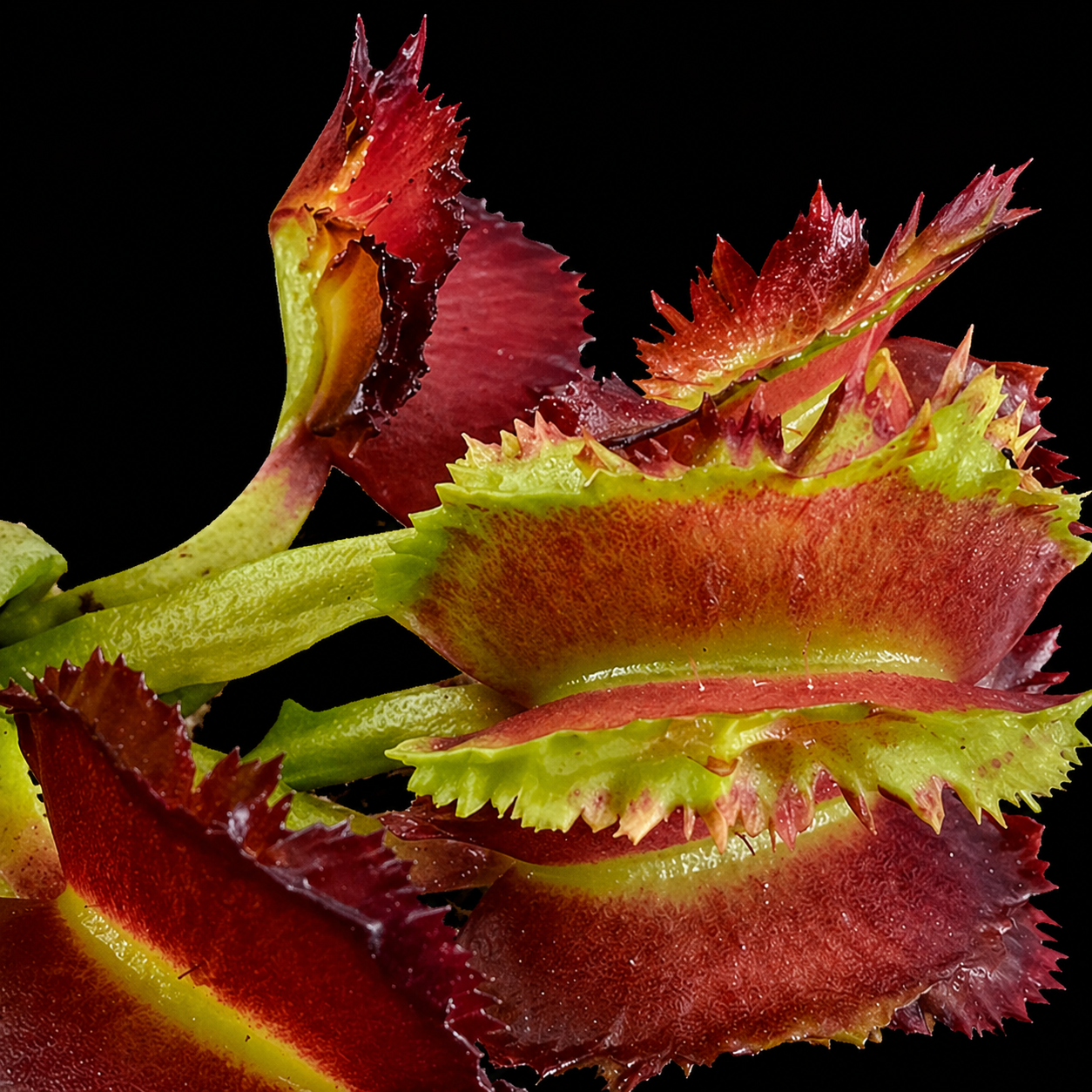
Photo: ©️ Diflora (Valerio Guidolin / Luca Parolin) | Source: Diflora.it. | Image courtesy of Diflora s.s.
-


SKU:DION-8390-GE
Dionaea muscipula 'Tesseract' (Venus Flytrap)
Dionaea muscipula 'Tesseract' (Venus Flytrap)
Dionaea muscipula 'Tesseract' is a cultivated Venus Flytrap clone maintained through vegetative propagation to preserve its unique characteristics. This cultivar originated in horticultural collections where growers selected plants displaying stable mutations or unusual growth traits. Like all Venus Flytraps, it ultimately descends from populations native to the coastal bogs of North and South Carolina in the United States.
'Tesseract' is particularly recognised for being mutation producing angular and unusual trap architecture. Mature plants produce paired snap traps equipped with sensitive trigger hairs that enable rapid prey capture. Depending on light intensity, season and maturity, the traps may develop green, red, burgundy or orange pigmentation that highlights the distinctive form of the cultivar.
Growth occurs as a low perennial rosette that expands gradually through division. The defining features of 'Tesseract' remain most stable when propagated vegetatively rather than from seed, making genuine clones highly sought after by collectors. Like all forms of Dionaea muscipula, the plant supplements its nutrition through the capture and digestion of small insects while requiring a cool winter dormancy for long-term health.
Origin: Cultivated Venus Flytrap cultivar
Plant Type: Temperate carnivorous perennial
Genus: Dionaea
Species: muscipula
Growth Habit: Rosette-forming carnivorous plant
Trap Type: Snap trap
Dormancy: Winter dormancy required
Propagation: Division, leaf pullings and tissue culture
What's Included: One healthy Dionaea muscipula 'Tesseract' growing in its nursery container.
A tissue culture plants are grown in clear gel, transparent container that holds multiple young plants (typically 3 or more) grown under laboratory conditions.
Our Gel Cup are non-sterile gel media that we use for start the hardening process after a plant has been in tissue culture.These vessels provide a carefully controlled environment, keeping the plants healthy as the get ready to transition to standard growing conditions.
Quick Hardening Steps:
- Open Lid Gradually: Slightly open the cup to slowly reduce humidity.
- Maintain Humidity: Gradually decrease humidity over 2–4 weeks.
- Indirect Light: Start with gentle, indirect lighting.
- Moist Soil: Keep media damp, never wet.
- Monitor Closely: Slowly increase airflow and light exposure.


Each transparent Transition Cup (5 cm diameter × 7 cm height) contains a juvenile carnivorous plant that has moved beyond sterile tissue culture and into a structured transition medium.
Inside, you’ll find a young carnivorous plant securely planted in a semi-solid blend designed to support root development while easing the shift from gel to soil.
This carefully balanced environment maintains optimal humidity and airflow, helping reduce transplant shock and supporting the plant during this critical transition stage.
Suitable for both novice growers and experienced collectors, Transition Cups provide a reliable, low-stress way to guide delicate carnivorous plants toward successful soil establishment.
Each transparent carnivorous cup (5 cm diameter x 7 cm height) contains a juvenile carnivorous plant freshly transitioned from tissue culture.
Inside, you'll find a young carnivorous plant planted securely in special growing media soil that replicates their natural habitat.
This carefully balanced environment maintains optimal humidity, aiding the delicate plants during their crucial hardening-off stage.
Perfect for both novice growers and experienced collectors, these cups provide a simple and effective way to cultivate and enjoy captivating insect-eating plants.
Couldn't load pickup availability
Dionaea muscipula 'Tesseract' is a cultivated Venus Flytrap clone maintained through vegetative propagation to preserve its unique characteristics. This cultivar originated in horticultural collections where growers selected plants displaying stable mutations or unusual growth traits. Like all Venus Flytraps, it ultimately descends from populations native to the coastal bogs of North and South Carolina in the United States.
'Tesseract' is particularly recognised for being mutation producing angular and unusual trap architecture. Mature plants produce paired snap traps equipped with sensitive trigger hairs that enable rapid prey capture. Depending on light intensity, season and maturity, the traps may develop green, red, burgundy or orange pigmentation that highlights the distinctive form of the cultivar.
Growth occurs as a low perennial rosette that expands gradually through division. The defining features of 'Tesseract' remain most stable when propagated vegetatively rather than from seed, making genuine clones highly sought after by collectors. Like all forms of Dionaea muscipula, the plant supplements its nutrition through the capture and digestion of small insects while requiring a cool winter dormancy for long-term health.
Origin: Cultivated Venus Flytrap cultivar
Plant Type: Temperate carnivorous perennial
Genus: Dionaea
Species: muscipula
Growth Habit: Rosette-forming carnivorous plant
Trap Type: Snap trap
Dormancy: Winter dormancy required
Propagation: Division, leaf pullings and tissue culture
What's Included: One healthy Dionaea muscipula 'Tesseract' growing in its nursery container.
A tissue culture plants are grown in clear gel, transparent container that holds multiple young plants (typically 3 or more) grown under laboratory conditions.
Our Gel Cup are non-sterile gel media that we use for start the hardening process after a plant has been in tissue culture.These vessels provide a carefully controlled environment, keeping the plants healthy as the get ready to transition to standard growing conditions.
Quick Hardening Steps:
- Open Lid Gradually: Slightly open the cup to slowly reduce humidity.
- Maintain Humidity: Gradually decrease humidity over 2–4 weeks.
- Indirect Light: Start with gentle, indirect lighting.
- Moist Soil: Keep media damp, never wet.
- Monitor Closely: Slowly increase airflow and light exposure.
Each transparent Transition Cup (5 cm diameter × 7 cm height) contains a juvenile carnivorous plant that has moved beyond sterile tissue culture and into a structured transition medium.
Inside, you’ll find a young carnivorous plant securely planted in a semi-solid blend designed to support root development while easing the shift from gel to soil.
This carefully balanced environment maintains optimal humidity and airflow, helping reduce transplant shock and supporting the plant during this critical transition stage.
Suitable for both novice growers and experienced collectors, Transition Cups provide a reliable, low-stress way to guide delicate carnivorous plants toward successful soil establishment.
Each transparent carnivorous cup (5 cm diameter x 7 cm height) contains a juvenile carnivorous plant freshly transitioned from tissue culture.
Inside, you'll find a young carnivorous plant planted securely in special growing media soil that replicates their natural habitat.
This carefully balanced environment maintains optimal humidity, aiding the delicate plants during their crucial hardening-off stage.
Perfect for both novice growers and experienced collectors, these cups provide a simple and effective way to cultivate and enjoy captivating insect-eating plants.