-
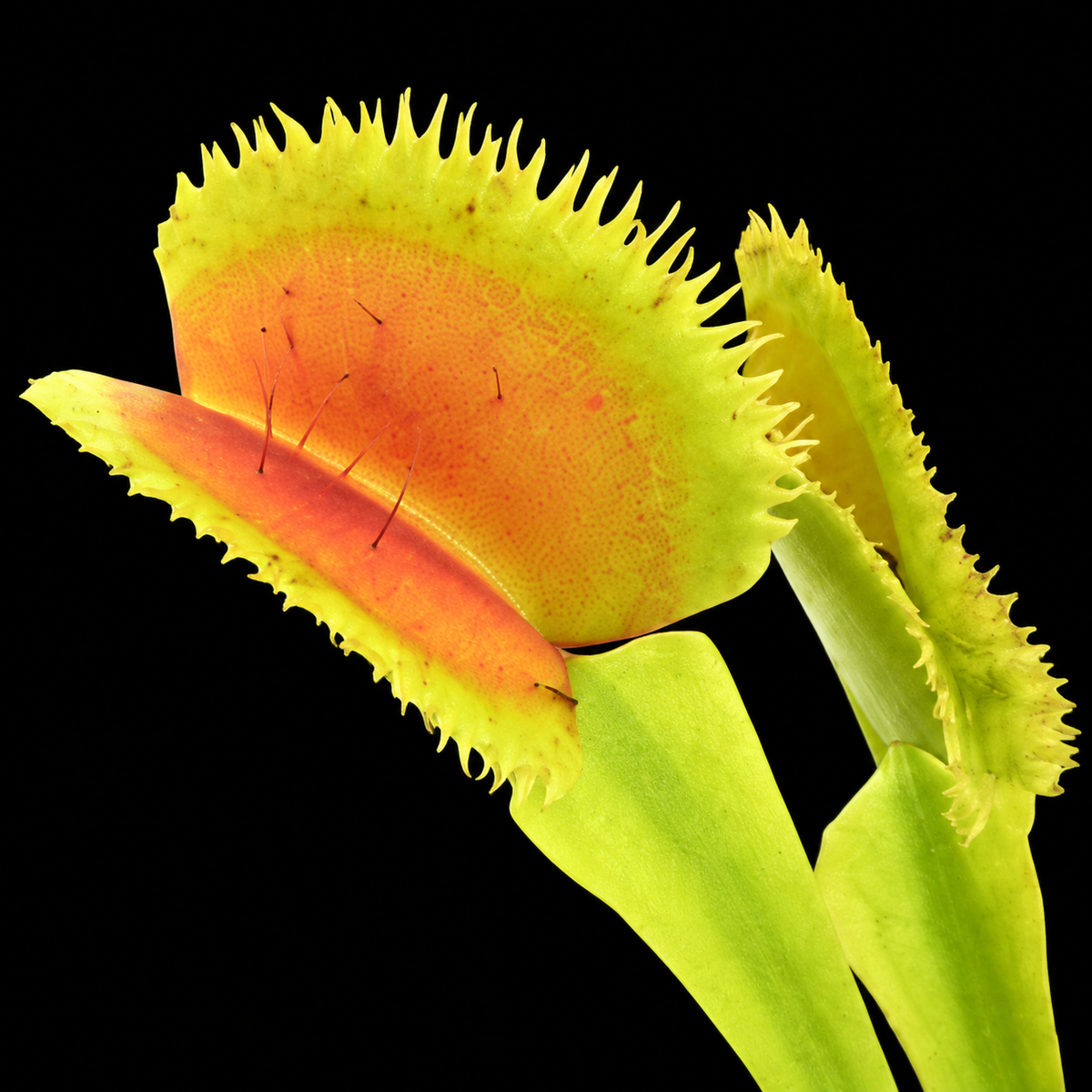
 ©️ Diflora (Valerio Guidolin / Luca Parolin) | Source: Diflora.it. | Image courtesy of Diflora s.s.

SKU:DION2394G
Dionaea muscipula 'FTS Lunatic Fringe' (Venus Flytrap)
Dionaea muscipula 'FTS Lunatic Fringe' (Venus Flytrap)
Dionaea muscipula 'FTS Lunatic Fringe' is a distinctive Venus flytrap selected by FlytrapStore from seed harvested in 2009. Its deeply serrated trap margins form an unusual, woolly-looking fringe, while spring and summer growth is characteristically tall and upright. Capable of developing large traps as it matures, this clone brings striking texture to a carnivorous plant collection; the species originates from the coastal plains of North and South Carolina, USA.
What's included
Gel Cup (3+ Plants): One gel cup containing at least three tissue-cultured plantlets of Dionaea muscipula 'FTS Lunatic Fringe'. Plantlets require careful deflasking and gradual acclimatisation before growing in normal nursery conditions.
Growing guide
The following growing guide applies after deflasking and acclimatisation.
- Light: Provide very bright light, working gradually towards full sun as plants establish. Keep sealed gel cups and newly deflasked plantlets out of hot direct sunlight.
- Water: Use rainwater, distilled water or reverse-osmosis water. Keep the growing medium consistently moist using a shallow tray, with the crown above the water level.
- Soil: Use an unfertilised carnivorous plant mix, such as sphagnum peat and washed silica sand. Avoid ordinary potting mix, compost and added fertiliser.
- Feeding: Established outdoor plants catch their own insects. Do not add insects or fertiliser to the gel cup, and avoid repeatedly triggering traps for entertainment.
- Seasonal care: Established outdoor plants naturally slow down and rest during winter. Keep the medium moist and protect small pots from prolonged severe freezes; newly deflasked plantlets need gentle establishment conditions.
- Maintenance: Gently rinse away residual gel when deflasking and gradually increase ventilation as plantlets establish. Remove fully dead leaves carefully, avoiding damage to the growing point.
Plants are living products and naturally vary in size and colour. Mature trap size and the distinctive fringe develop with age and suitable growing conditions.
A tissue culture plants are grown in clear gel, transparent container that holds multiple young plants (typically 3 or more) grown under laboratory conditions.
Our Gel Cup are non-sterile gel media that we use for start the hardening process after a plant has been in tissue culture.These vessels provide a carefully controlled environment, keeping the plants healthy as the get ready to transition to standard growing conditions.
Quick Hardening Steps:
- Open Lid Gradually: Slightly open the cup to slowly reduce humidity.
- Maintain Humidity: Gradually decrease humidity over 2–4 weeks.
- Indirect Light: Start with gentle, indirect lighting.
- Moist Soil: Keep media damp, never wet.
- Monitor Closely: Slowly increase airflow and light exposure.
Each transparent Transition Cup (5 cm diameter × 7 cm height) contains a juvenile carnivorous plant that has moved beyond sterile tissue culture and into a structured transition medium.
Inside, you’ll find a young carnivorous plant securely planted in a semi-solid blend designed to support root development while easing the shift from gel to soil.
This carefully balanced environment maintains optimal humidity and airflow, helping reduce transplant shock and supporting the plant during this critical transition stage.
Suitable for both novice growers and experienced collectors, Transition Cups provide a reliable, low-stress way to guide delicate carnivorous plants toward successful soil establishment.
Each transparent carnivorous cup (5 cm diameter x 7 cm height) contains a juvenile carnivorous plant freshly transitioned from tissue culture.
Inside, you'll find a young carnivorous plant planted securely in special growing media soil that replicates their natural habitat.
This carefully balanced environment maintains optimal humidity, aiding the delicate plants during their crucial hardening-off stage.
Perfect for both novice growers and experienced collectors, these cups provide a simple and effective way to cultivate and enjoy captivating insect-eating plants.
Couldn't load pickup availability
Dionaea muscipula 'FTS Lunatic Fringe' is a distinctive Venus flytrap selected by FlytrapStore from seed harvested in 2009. Its deeply serrated trap margins form an unusual, woolly-looking fringe, while spring and summer growth is characteristically tall and upright. Capable of developing large traps as it matures, this clone brings striking texture to a carnivorous plant collection; the species originates from the coastal plains of North and South Carolina, USA.
What's included
Gel Cup (3+ Plants): One gel cup containing at least three tissue-cultured plantlets of Dionaea muscipula 'FTS Lunatic Fringe'. Plantlets require careful deflasking and gradual acclimatisation before growing in normal nursery conditions.
Growing guide
The following growing guide applies after deflasking and acclimatisation.
- Light: Provide very bright light, working gradually towards full sun as plants establish. Keep sealed gel cups and newly deflasked plantlets out of hot direct sunlight.
- Water: Use rainwater, distilled water or reverse-osmosis water. Keep the growing medium consistently moist using a shallow tray, with the crown above the water level.
- Soil: Use an unfertilised carnivorous plant mix, such as sphagnum peat and washed silica sand. Avoid ordinary potting mix, compost and added fertiliser.
- Feeding: Established outdoor plants catch their own insects. Do not add insects or fertiliser to the gel cup, and avoid repeatedly triggering traps for entertainment.
- Seasonal care: Established outdoor plants naturally slow down and rest during winter. Keep the medium moist and protect small pots from prolonged severe freezes; newly deflasked plantlets need gentle establishment conditions.
- Maintenance: Gently rinse away residual gel when deflasking and gradually increase ventilation as plantlets establish. Remove fully dead leaves carefully, avoiding damage to the growing point.
Plants are living products and naturally vary in size and colour. Mature trap size and the distinctive fringe develop with age and suitable growing conditions.
A tissue culture plants are grown in clear gel, transparent container that holds multiple young plants (typically 3 or more) grown under laboratory conditions.
Our Gel Cup are non-sterile gel media that we use for start the hardening process after a plant has been in tissue culture.These vessels provide a carefully controlled environment, keeping the plants healthy as the get ready to transition to standard growing conditions.
Quick Hardening Steps:
- Open Lid Gradually: Slightly open the cup to slowly reduce humidity.
- Maintain Humidity: Gradually decrease humidity over 2–4 weeks.
- Indirect Light: Start with gentle, indirect lighting.
- Moist Soil: Keep media damp, never wet.
- Monitor Closely: Slowly increase airflow and light exposure.
Each transparent Transition Cup (5 cm diameter × 7 cm height) contains a juvenile carnivorous plant that has moved beyond sterile tissue culture and into a structured transition medium.
Inside, you’ll find a young carnivorous plant securely planted in a semi-solid blend designed to support root development while easing the shift from gel to soil.
This carefully balanced environment maintains optimal humidity and airflow, helping reduce transplant shock and supporting the plant during this critical transition stage.
Suitable for both novice growers and experienced collectors, Transition Cups provide a reliable, low-stress way to guide delicate carnivorous plants toward successful soil establishment.
Each transparent carnivorous cup (5 cm diameter x 7 cm height) contains a juvenile carnivorous plant freshly transitioned from tissue culture.
Inside, you'll find a young carnivorous plant planted securely in special growing media soil that replicates their natural habitat.
This carefully balanced environment maintains optimal humidity, aiding the delicate plants during their crucial hardening-off stage.
Perfect for both novice growers and experienced collectors, these cups provide a simple and effective way to cultivate and enjoy captivating insect-eating plants.